


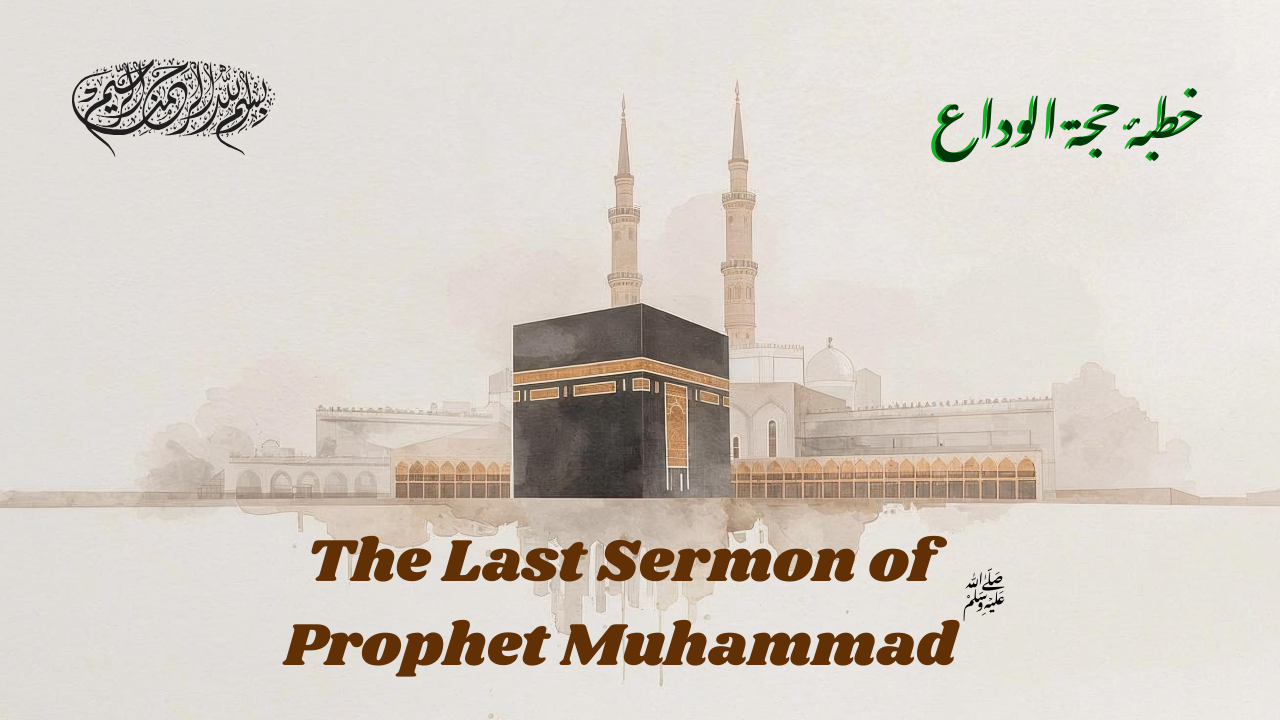
The Last Sermon of Prophet Muhammad ﷺ, delivered during his final pilgrimage (Hajj), is one of the most significant speeches in Islamic history. This sermon is a timeless guide for humanity, emphasizing morality, equality, justice, and spirituality. It reflects the core values of Islam and continues to inspire Muslims and non-Muslims alike.
1. The Equality of All Humans
Prophet Muhammad ﷺ said in his last sermon: “All mankind is from Adam and Eve. An Arab has no superiority over a non-Arab, nor does a non-Arab have any superiority over an Arab; a white has no superiority over a black, nor does a black have any superiority over a white—except by piety and good action.”
This statement highlights the principle of equality, breaking all forms of racial, ethnic, and social discrimination. In today’s diverse world, this teaching is more relevant than ever.
2. The Sanctity of Life, Property, and Honor
The Prophet ﷺ emphasized the sacredness of every Muslim’s life, property, and dignity. He warned against harming others, cheating, or violating rights. This principle teaches us respect, tolerance, and justice in personal and professional life.
3. The Importance of Women’s Rights
In his final sermon, Prophet Muhammad ﷺ reminded everyone to treat women with respect, kindness, and fairness. He said: “Treat women well, for they are your partners and committed helpers.” This teaching encourages equality, compassion, and the protection of women’s rights in society.
4. The Essence of Faith and Accountability
Prophet Muhammad ﷺ emphasized the importance of adhering to Allah’s commands, performing prayers, and being conscious of accountability. He reminded the community that they will all be answerable for their deeds, encouraging moral responsibility and spiritual mindfulness.
5. The Prohibition of Usury and Injustice
The Prophet ﷺ condemned exploitation, usury (Riba), and oppression. He urged Muslims to practice fairness in trade, respect contracts, and avoid economic injustices. This is a principle that applies to financial dealings even today, promoting ethical business practices.
6. Brotherhood and Unity
The Last Sermon called for unity among Muslims and all of humanity. Prophet Muhammad ﷺ emphasized that all believers are brothers and sisters in faith, and no one should harm or oppress another. This teaching strengthens community bonds and encourages cooperation for a peaceful society.